
VIP member
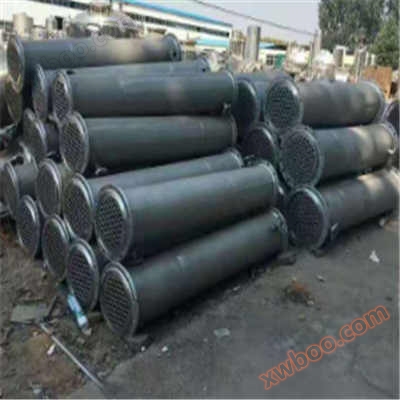
Processing customized condenser
The heat transfer methods for processing customized condensers include mass transfer driven heat transfer, solid heat conduction, convective heat tran
Product details
The heat transfer methods for processing customized condensers include mass transfer driven heat transfer, solid heat conduction, convective heat transfer, and condensation heat transfer. The mechanisms of mass transfer, heat transfer, and fluid flow are relatively complex, and there is currently no mature theory. Generally, the design, manufacturing, and application of customized condensers are based on empirical parameters.

The heat exchange part is the core part of the customized condenser, and the wet bulb temperature has a significant impact on the performance of the customized condenser. Based on the mass and heat transfer models of the customized condenser and key components such as coils and packing, the performance of the advanced BAC and EVAPCO customized condensers was tested. The technical advantage of AC lies in the improvement of water film coverage and the use of packing, while the technical advantage of EVAPCO lies in the use of efficient heat exchange coils, which thin the water film and form secondary flow to increase the heat transfer coefficient. Based on this, twisted tubes were applied to the customized condenser.
Online inquiry
-
Contacts
-
Company
-
Telephone
-
Email
-
WeChat
-
Verification Code
-
Message Content
-