
VIP member
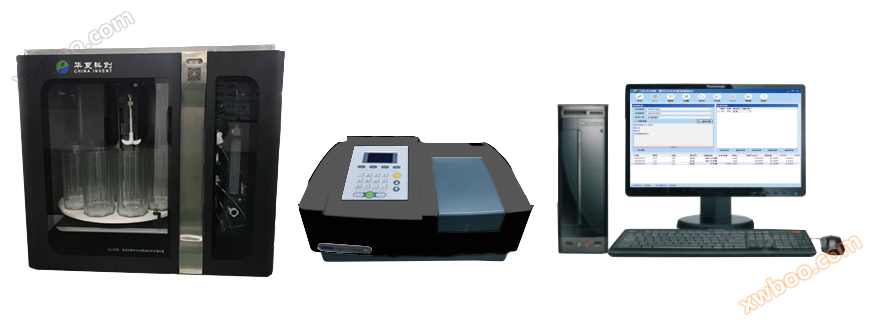
OIL 520 Fully Automatic UV Spectrometer for Oil Analysis
OIL 520 Fully Automatic UV Spectrometer for Oil Analysis
Product details
1. Compliant with national standards
National Environmental Protection Standard of the People's Republic of China "HJ970-2018" Determination of Water Quality and Petroleum by UV spectrophotometry (Trial).
2. Technical principles
Based on the "HJ970-2018 Water Quality - Determination of Petroleum Substances by UV spectrophotometry (Trial)", the extraction solvent is used to extract oil substances from the water in a certain proportion using a rotating stirring disturbance method. After removing water from the extraction solvent, polar substances such as animal and vegetable oils are adsorbed by magnesium silicate, and the absorbance is measured at a wavelength of 225nm. The petroleum content and absorbance values comply with Lambert Beer's law.
3. System composition:
Liquid storage unit: used to store the test sample and extraction solvent, can simultaneously store 10 test samples, and the volume of each test sample can range from 10ml to 600ml.
Preprocessor unit: using rotary stirring perturbation extraction technology, with high extraction efficiency, it completes the extraction and separation of the test sample and extraction solution, and sends the processed sample to the colorimetric cell for analysis by the analysis unit. After analysis is completed, the unit discharges the sample clean and automatically cleans the pipeline of the unit.
UV spectrophotometry automatic analysis unit: This unit detects samples processed by the pre-processing unit, displays the detection results on the screen, saves the detection results in the computer, and can print according to the user's specified format.
Fully enclosed waste liquid treatment unit: The tested water sample and solvent are automatically emptied into different waste liquid tanks through airflow, and there is no residual liquid in the pipeline, which does not affect the testing of the next sample; Reduce the amount of waste liquid processed, ensuring safety and reliability; Reduce secondary environmental pollution.
4. Application Fields
Used for the determination of petroleum in surface water, groundwater, and seawater.
5. Instrument features
1) Analysis method: comply with the current national standard analysis method (HJ970-2018) for trial implementation;
2) Extraction solvent: n-hexane;
3) High degree of automation: It integrates automatic extraction agent constant volume, sample extraction processing, three-stage extraction liquid separation, adsorption, sample injection, system cleaning, analysis and determination to achieve automation, saving manpower and time;
4) Good safety: The extraction agent is fully enclosed in all stages of liquid storage, sample extraction, testing, and waste disposal, reducing the opportunity for operators to come into contact with harmful reagents and making it safer;
5) Easy to maintain equipment: The patented oil-water separation membrane replaces anhydrous sodium sulfate in absorbing trace amounts of water, eliminating the need for frequent replacement of anhydrous sodium sulfate and making it more convenient to use;
6) High extraction efficiency: using rotary stirring disturbance extraction technology, the gas volume can be adjusted according to the actual situation of the water sample, and the extraction efficiency is greater than 98%;
7) Equipped with dedicated analysis software: integrating scanning, analysis, and calculation, with computer software copyright certificate;
8) Calibration method: standard curve calibration;
9) Light source system: The light source uses deuterium lamps with high wavelength accuracy, with a lifespan of over 5000 hours;
10) The entire pre-treatment system is made of fully corrosion-resistant and non oil friendly materials, and adopts a self-cleaning cleaning process with no cross contamination;
11) The magnesium silicate adsorption column can be automatically replaced without manual labor, with one sample replaced once or multiple samples replaced once (optional). (Using airflow method to allow the solvent to fully vibrate and come into contact with magnesium silicate);
12) The front end of the instrument adopts a molecular sieve structure to prevent impurities from blocking the pipeline;
13) Equipped with dedicated samplers, sampling boxes, and sampling cups made of transparent, oil-free, and non fragile materials with graduations, it can accurately measure the volume of water samples on site and collect water samples without the need to transfer water samples. It can be tested directly on the machine to avoid sample errors caused by water sample transfer;
14) Automatic configuration of standard curve: It can configure various concentration points of the curve and automatically generate standard curves;
15) Automatic dilution: After testing the excess range, it can be automatically diluted according to the set excess concentration threshold until the test value is within the measurement range, ensuring the accuracy of the sample concentration;
16) Reagent remaining amount monitoring: Real time monitoring of reagent remaining amount, providing warning function for insufficient reagent amount;
17) The tested water sample and solvent are automatically discharged into the waste liquid tank by blowing air, and there is no residue in the pipeline, which does not affect the testing of the next sample;
18) The instrument comes with a fully enclosed ventilation system and exhaust gas collection system, which can solve the harm of harmful gases to experimental personnel without the need for a fume hood;
19) Dual injection mode: The fully automatic injection mode or manual injection mode can be quickly switched. Fully automatic injection mode, used for continuous testing of oil content in water through pre-treatment. Manual injection mode, can be used for single machine operation, to test oil in water after external extraction.
20) Mobile APP function: Through big data cloud, it is possible to control the operation status, fault warning, data approval query, and remote diagnosis of instruments on the mobile phone;
Online inquiry
-
Contacts
-
Company
-
Telephone
-
Email
-
WeChat
-
Verification Code
-
Message Content
-