VIP member
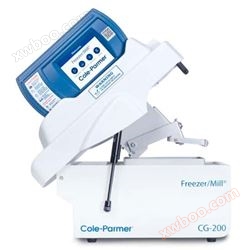
Cole Parmer liquid nitrogen cryogenic grinder CG-200 (formerly 6775)
The Cole Parmer liquid nitrogen cryogenic grinder CG-200 (formerly 6775) has some samples that are physically flexible and tough at room temperature,
Product details
Cole Parmer liquid nitrogen cryogenic grinder CG-200 (formerly 6775)


At room temperature, some samples have strong physical flexibility and toughness, making them difficult to grind and grind. However, their physical properties change at liquid nitrogen temperature, making them easier to grind and grind, such as hair, feathers, rubber, bones, etc. Thermal effects are generated during grinding, which can cause a sharp increase in sample temperature during room temperature grinding. Liquid nitrogen frozen grinding samples are always immersed in liquid nitrogen, avoiding the loss of volatile substances and sensitive sample substances due to frictional heating. Volatile substances are retained in a closed grinding tank, causing some substances to denature and dissipate, such as hydrocarbons and low boiling metals. Ultra low temperature can eliminate sample degradation and avoid damaging protein, DNA, and RNA samples.
During grinding, place the sample into a grinding tank and immerse the entire tank in liquid nitrogen. The grinding tank remains submerged in liquid nitrogen throughout the grinding process. The characteristic of grinding technology is the use of electromagnetic driven impactor grinding technology. During the grinding process, only the grinding column moves, and the thermal effect is low when the instrument is used, resulting in good low-temperature maintenance of the sample. Due to the absence of any other mechanical moving parts, the instrument has low noise and low failure rate during use. The Freezer Mill freezing grinding series all use full touch screen programmable control instruments. After the sample is placed in the instrument, different pre cooling times, impact frequencies, single grinding times, cooling intervals during grinding, cycle times, and other information are set according to the different samples. It is also possible to retrieve historical grinding programs based on past settings, making it convenient for users to handle different samples. Equipped with a safety interlock device, when the liquid nitrogen level is too low, the liquid level sensor will alarm, automatically fill the liquid nitrogen, and the instrument will stop running to protect the sample from damage. Different models are equipped with pre cooling chambers of different sizes for sample pre cooling, improving work efficiency.
Cole Parmer liquid nitrogen cryogenic grinder CG-200 (formerly 6775)


grinding jar
There are four sizes of grinding tanks, which consist of end plugs, grinding columns, and tank bodies. Depending on the nature of the sample, options include stainless steel, all plastic plastic, and low chromium stainless steel. The sample size for large cans is 1-100g; the sample size for medium cans is 1-40g; the sample size for small cans is 0.1-5.0g; and the sample size for trace cans is 0.1-0.5g.

Note: The plastic grinding column is made of stainless steel material wrapped entirely in plastic;
Low chromium stainless steel materials are mainly used for ROHS and WEEE testing;
All plastic materials are resistant to liquid nitrogen temperature and can be reused, and their service life is dependent on the sample.
All accessories for the combination grinding tank can be purchased separately and are available for sale at the ColPalmer JD flagship store.
Other accessories

Note: All sizes of tanks have corresponding accessories
Liquid nitrogen automatic filling system: It can safely and efficiently supply liquid nitrogen during sample grinding, reducing concerns about liquid nitrogen leakage. There is no need to manually replenish liquid nitrogen to control the temperature during use, and there is no need to do so before grinding
It is necessary to pre cool the sample and grinding container separately, which greatly improves safety. When using a low-pressure liquid nitrogen tank in conjunction with an automatic filling machine, it is recommended to input a pressure of 20-22 psi.
Online inquiry
-
Contacts
-
Company
-
Telephone
-
Email
-
WeChat
-
Verification Code
-
Message Content
-